Internal linking is one of the most overlooked yet powerful parts of SEO. While marketers focus heavily on content, backlinks and UX — internal links quietly shape how Google and users understand your site. In 2025, internal linking matters more than ever because Google’s algorithms increasingly depend on relationships, semantics and context rather than keywords alone.
This guide breaks down how internal linking works, why it influences search and AI-driven experiences, and how to design a modern internal linking system that improves crawlability, indexation, authority flow and conversions. It also connects directly with other technical foundations such as structured data, Core Web Vitals and site architecture, making it a key part of your Technical SEO approach.
If you’re working on your broader technical foundation, also review the Technical SEO & Analytics Guide and website audit framework.
1. What Is Internal Linking and Why It Matters
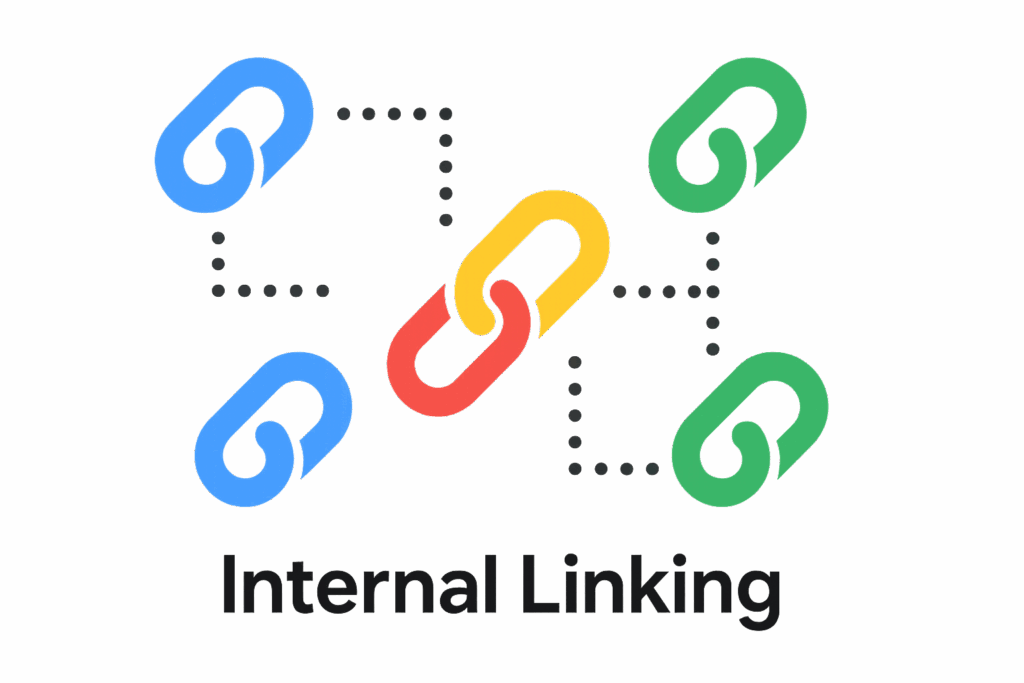
An internal link is a hyperlink that connects one page on your website to another. While simple in theory, internal linking carries enormous weight. It helps Google discover pages, understand hierarchy, build relationships between topics and determine which content matters most.
For users, internal links guide exploration, reduce bounce rate, increase time on site and improve navigation. For Google, they act as the bridge that connects topics and distributes page-level authority.
Internal linking directly supports:
- Crawlability: Google can discover deeper pages through interconnected paths.
- Indexation: Orphan pages often fail to get indexed due to no internal links.
- Semantic understanding: Google interprets the relationships between pages.
- Authority flow: Strong pages can pass value to lower-authority pages.
- User experience: Smooth navigation improves engagement and conversion.
2. Why Internal Linking Is Even More Important in 2025
Google and AI search systems now use entity-based understanding and semantic classification. This means ranking is no longer about isolated pages — but about systems of interconnected content. Internal links provide the structure that supports this ecosystem.
Google’s documentation on crawlable links emphasizes that links must be visible, usable and non-blocked by JavaScript for proper indexing. Industry sources such as Semrush, Backlinko and Moz also highlight internal linking as a major factor in improving rankings and distributing page-level authority.
When internal linking is implemented alongside structured data/schema, site performance and strong URL hygiene, it becomes a powerful accelerant for organic visibility.
3. Core Principles of Effective Internal Linking
3.1 Use Natural, Descriptive Anchor Text
Anchor text helps Google understand context. Avoid generic labels like “click here” or “learn more.” Instead, use descriptive text that matches intent.
Examples:
- “Explore our E-commerce SEO services”
- “Learn how GTM strategy improves tracking accuracy”
3.2 Build Topic Clarity with Related Pages
Pages within the same category or topic should interlink naturally. This helps Google understand your topical map, which is critical for AEO (Answer Engine Optimization).
3.3 Link High-Authority Pages to Strategic Pages
Your strongest pages (home, service pages, major blogs) should pass authority to conversion pages and important resources.
3.4 Ensure Every Page Has At Least 3–5 Internal Links
Pages with zero internal links (orphan pages) are much harder for Google to rank or even index.
3.5 Maintain a Logical, Not Overdone Structure
Internal linking should always feel natural — not excessive or manipulative. Avoid stuffing 20+ links in a paragraph.
4. Types of Internal Links (2025 Best Practices)
4.1 Navigational Links
Header and footer links help Google understand top-level structure. They ensure important pages such as services remain easily accessible.
4.2 In-Content Contextual Links
These have the most SEO value. They describe relationships between ideas and help reinforce topic relevance.
Examples in this blog:
- Core Web Vitals: performance metrics for marketers
- Technical audits: conducting a 60-minute audit
- Schema markup: structured data guide
4.3 Breadcrumb Links
Breadcrumbs strengthen hierarchy, help users retrace their steps and improve indexing. They are especially effective for multi-service setups and category-based structures.
4.4 Sidebar and “Related Content” Links
These help guide users to deeper content and are helpful for SEO when relevant, not automated blindly.
5. Designing a Modern Internal Linking Framework
5.1 Establish Your Core Hubs
Your primary hubs should be your service pages and high-intent resources:
All relevant blog posts should link back to the appropriate hub pages.
5.2 Build Supporting Articles Around Each Hub
These deeper articles strengthen the relevance of each service category. For example:
- Technical SEO hub → audits, Core Web Vitals, schema markup
- Performance marketing hub → Google Ads, Meta Ads, landing pages
- E-commerce hub → PDP optimization, category SEO, D2C growth content
5.3 Use Cross-Linking to Improve Discoverability
Pages across hubs may link if the context supports it. For example, analytics content naturally links to GTM strategy.
6. How Internal Linking Boosts AI Search & AEO
AI search systems such as Google’s AI Overviews rely on content relationships to identify expertise, relevance and context. Internal links act as a semantic map of your site, showing which topics you specialize in and how authoritative each page is.
Strong internal linking helps with:
- Better entity clustering
- Strong contextual relationships
- Improved answer extraction
- Higher probability of inclusion in AI summaries
AI systems favor sites with clear content relationships. Internal links are the backbone of that clarity.
7. Common Internal Linking Mistakes to Avoid
- Using anchor text that’s too generic (“click here”)
- Not linking to high-value service pages
- Creating orphan pages
- Linking too aggressively within one paragraph
- Using JavaScript links that block crawling
- Not updating older blogs with newer resources
8. Internal Linking for Industry Pages
Industry pages must connect both upward (to services) and downward (to relevant blogs). Examples:
- Real Estate ↔ landing page SEO, lead-gen content
- Digital Commerce ↔ category SEO, PDP optimization
- B2B SaaS & IT ↔ attribution, analytics and CRO
9. A Practical Internal Linking Checklist
- Every article links to at least one related service page
- Every service page links back to key supporting articles
- Use descriptive anchor text with clear intent
- Ensure important pages receive 5–20 internal links
- Remove orphan pages immediately
- Use breadcrumb navigation
- Prioritize contextual links inside content
10. When Should You Improve Your Internal Linking?
You should re-evaluate your internal linking strategy when:
- Your organic traffic is flat
- Important pages are not ranking
- You publish new content regularly
- Your crawl budget is being wasted
- Your pages show “Discovered – currently not indexed” in GSC
Internal linking often solves indexing gaps without additional backlinks.
11. Final Thoughts
Internal linking is one of the highest-impact improvements you can make to your website. It strengthens crawlability, improves ranking potential and enhances user experience. When paired with strong technical foundations such as technical SEO, schema markup and Core Web Vitals — internal linking becomes a compounding advantage.
Focus on clarity, context and helpful connections. Build a structure that benefits both users and search engines. The result is stronger visibility, improved conversions and long-term growth.