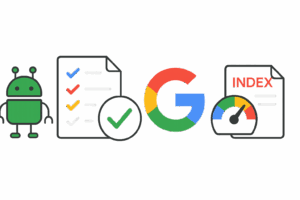
Technical SEO Checklist: The Complete Action Plan for Ranking, Speed & Indexing
Technical SEO is the backbone of organic discovery. No matter how strong your content…
Read insight →
Cloud, DevOps & SRE Enablement
Most engineering teams reach a point where deploys slow down, incidents increase, and infrastructure costs become hard to explain. We fix the architecture, pipelines, and observability that cause those problems.
Most outages and slow launches trace back to the same three problems. None of them require bad engineers. They require infrastructure that was built incrementally without a clear architecture, and never refactored.
Resources created manually over time, with no consistent naming, no environment parity between staging and production, and no record of what was deployed and when.
CI/CD that fails on minor dependency changes, no defined promotion workflow between environments, and deploys that take long enough that teams batch changes to avoid running them.
No single place to see service health, alerting that fires on noise rather than real failures, and security posture that has never been formally reviewed against SOC 2, ISO, or internal controls.
When infrastructure is treated as a shared product with defined users, a prioritised backlog, and measurable SLAs, reliability improves without requiring heroics from on-call engineers. We apply that framing to every engagement: architecture decisions are tied to product and release goals, not to whichever tool was convenient at the time.
Our Cloud & DevOps Framework
Each step produces a concrete output: a current-state map, an architecture decision record, a working pipeline, a live dashboard. Nothing ends as a slide deck recommendation.
Audit cloud accounts, pipelines, environments, cost allocation, security posture, and the last 90 days of incident history to document what the infrastructure actually looks like today.
Design landing zones, network topology, environment structure, and IAM patterns based on your team model, product topology, and compliance requirements.
Build infra-as-code, container templates, and CI/CD pipelines that define exactly how services are built, tested, promoted, and rolled back across environments.
Instrument logs, metrics, and traces. Define SLOs and error budgets per service. Wire alerts to real failure conditions so on-call engineers get pages that mean something.
Apply access controls, secrets management, backup policies, and automated guardrails mapped to SOC 2, HIPAA, ISO 27001, or your internal control framework.
Review reserved capacity, autoscaling policies, and idle resource cleanup. Update incident runbooks and architecture decisions as traffic, products, and team structure change.
Client Outcomes
These outcomes came from fixing specific infrastructure problems, not from migrating to a new cloud provider or adopting a new platform category.
65% reduction in P1 incidents after landing zone redesign, CI/CD refactor, and alert tuning. Deploy frequency increased from twice a week to daily.
40% infrastructure cost reduction through autoscaling policy corrections, reserved instance planning, and removal of resources that had not served traffic in over six months.
99.95% uptime across core customer journeys after adding multi-zone redundancy, automated backups, and SRE runbooks for the four most common failure modes.
"Deploys went from twice a week to daily. The infra is documented now, which means new engineers can contribute without a two-week onboarding just to understand what runs where."
CTO, B2B SaaS, U.S.
"We cut infra spend by 40% and got our first honest look at cost per service. The observability work means we catch failures before customers report them."
Head of Engineering, E-commerce, India
Industry-Specific Impact
The architecture principles are the same across industries. What differs is which failure mode costs the most. Here is where we start in each sector.
Multi-tenant isolation, per-environment promotion workflows, and feature flag infrastructure that let product teams ship independently without breaking shared services.
Explore →Autoscaling policies calibrated to your traffic patterns, edge caching for catalogue and content pages, and observability that covers checkout conversion as a service health signal.
Explore →Lead routing systems, CRM integrations, and data platforms built for reliability during high-demand launch windows when downtime has a direct cost per missed enquiry.
Explore →What You Get
Documented architecture, working automations, and runbooks your team can operate. Each deliverable is owned by your engineers before the engagement ends.
Environment design, network layout, IAM patterns, and account structure documented in architecture decision records your team can reference when the next change comes.
Pipelines and Terraform or CloudFormation modules that define how every service is built, tested, and deployed. Standard templates reduce the time to onboard a new service from days to hours.
Dashboards, alert rules, SLO definitions, and on-call runbooks. MTTR drops when engineers can locate a failure in minutes rather than spending an hour reading logs across four tools.
Access controls, secrets management, backup automation, and policy-as-code mapped to SOC 2, HIPAA, ISO 27001, or your internal control requirements.
Step-by-step runbooks for your most common failure scenarios, plus a 90 to 180 day roadmap covering cost reduction, reliability improvements, and infrastructure capabilities your product roadmap will need next.
We review your architecture, pipelines, observability, and security posture, then deliver a 90-day roadmap with specific changes ranked by impact on reliability, cost, and release speed.
Practical guides on cloud architecture, CI/CD automation, observability, platform engineering, and scaling infrastructure without accumulating reliability debt.
Technical SEO is the backbone of organic discovery. No matter how strong your content…
Read insight →
Technical SEO has become the central driver of organic visibility in 2025. Search engines…
Read insight →
A modern website must be fast, discoverable, mobile-ready and analytics-accurate. But most brands don’t…
Read insight →Questions clients ask before starting a cloud or DevOps engagement.